- Beyond the Password
- Posts
- The Human Cost Behind the Headlines
The Human Cost Behind the Headlines
Cyber breaches aren't just technical problems. They're human problems with far-reaching emotional, psychological, and practical consequences that can ripple through a family for years.

Steve Tran
April 25, 2025

We often hear about massive data breaches in the news - millions of records exposed, companies paying hefty fines, executives apologizing. But these headlines mask the true impact. Behind every statistic is a real person whose life can be upended in ways most of us never imagine until it happens.
This isn't just anecdotal concern. According to the Federal Trade Commission, more than 1.1 million identity theft reports were submitted through their IdentityTheft.gov website in 2024 alone, with total fraud and identity theft reports reaching an all-time high of 5.7 million cases. Behind each of these reports is a story not unlike the one I'm about to share.
I used to think cyber breaches were abstract problems that only affected large corporations and government agencies. Then I became a police officer and witnessed firsthand how these digital crimes shatter lives in our community.
One particular case changed my perspective forever. A young pregnant woman came to our station, tears streaming down her face. She and her husband had just been denied financing for a minivan they desperately needed for their growing family. The dealership had handed them a credit report that revealed a shocking truth: for years, someone had been opening loans and credit cards in her name.
"We never finance anything," she explained between sobs. "We thought our credit was fine."
What struck me wasn't just her financial predicament but the profound violation she felt. Someone had been living a shadow life using her identity, and she had no idea until that humiliating moment in the financing office when her future plans collapsed.
The road to recovery wouldn't be quick or easy. Credit bureaus make clearing your name notoriously difficult, often requiring legal assistance that many victims cannot afford. What should have been a joyful time preparing for their new baby instead became consumed by paperwork, phone calls, and constant anxiety.
This wasn't an isolated incident. I took countless reports of stolen mail - not packages, but ordinary letters containing bank statements and credit card bills. Why would criminals want these? Because they contain enough personal information to conduct "OSINT" (Open Source Intelligence) research, enabling them to purchase your complete credit report online within minutes.
And what appears on that report? Your unredacted social security number and date of birth - the keys to your financial kingdom.
Therefore, identity theft isn't merely about financial loss. It's about the destruction of security and peace of mind. It's about the time stolen from victims as they struggle to reclaim their identities. It's about opportunities lost and milestones marred by someone else's criminal actions.
I once believed cyber security was something only IT departments needed to worry about. Now I understand it's a deeply personal issue that affects our most vulnerable moments - buying a home, starting a family, caring for aging parents, or planning for retirement.
This is why I take my job in cybersecurity so seriously. I care more about the things that prevent breaches, not just compliance checkboxes on a paper so we can move on. Every minute of every day I think about ways we can defend against cybercriminals.
The realization that transformed my thinking? Cyber breaches aren't just technical problems. They're human problems with far-reaching emotional, psychological, and practical consequences that can ripple through a family for years.
That pregnant woman at the police station counter didn't just lose the opportunity to buy a minivan that day. She lost her sense of security in a world where her identity had become a commodity to be stolen, traded, and exploited without her knowledge.
Those of us in cybersecurity are the invisible guardians of digital lives, working across company boundaries in a shared mission. But this is a community effort where potential victims play a crucial role. Your vigilance in monitoring accounts, your caution with personal information, your willingness to report suspicious activity - these actions form the final, most personal layer of defense in our collective shield against digital predators. Together, we form the human firewall between families and those who would steal not just their data, but their dreams.
But what can you do to protect yourself? First, know that federal law now entitles you to free weekly online credit reports from Equifax, Experian, and TransUnion. Access these at https://www.annualcreditreport.com/. Before COVID, we were limited to one free report annually, but that's changed. Regular monitoring allows you to spot suspicious activity quickly. Even more importantly, freezing your credit reports is completely free and perhaps the most effective preventative measure available. A credit freeze blocks access to your credit reports, making it nearly impossible for identity thieves to open new accounts in your name.
It's also free to have Google remove your personal information from its search results. Instructions can be found here: https://support.google.com/websearch/answer/12719076?hl=en. But this can be a manual and time-consuming process, and keep in mind Google is only one search engine. It's best to remove your data from the source that's exposing them to many different distribution points.
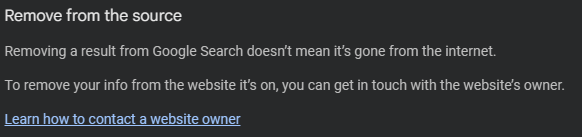
That's why I use Optery, because it's an automated service that keeps monitoring my information across the digital ecosystem, not just on a single platform.
Finally, invest in identity theft protection that includes insurance. If you become a victim, you'll have funds to cover legal and other costs involved in clearing your name, which can otherwise be financially devastating during an already traumatic time.
This is why cyber breaches matter. Not because of the headlines or the statistics, but because behind every breach is someone like that expectant mother - someone whose life story has been hijacked and rewritten against their will. But with vigilance and the right protective measures, we can make it harder for criminals to succeed and easier to recover if they do.
From a company perspective, breaches erode customer trust, which makes recovery far more costly both operationally and from a customer retention and acquisition standpoint. The damage extends beyond immediate financial losses and technical repairs. When customers lose faith in an organization's ability to protect their information, they take their business elsewhere. Rebuilding that trust often requires years of demonstrated commitment to security, transparency, and customer care - an investment far greater than implementing robust security measures from the start.
Ready to strengthen your cybersecurity posture? I am currently accepting a limited number of consulting engagements. To inquire about availability or to schedule a consultation, please visit eliandrett.com